
STORIES

Health

Discovering Freedom from Nightmares

Ruby* is a sweet 5-year-old girl who was afflicted with nightmares and was afraid of almost everyone around her. She was very timid and frequently wet the bed. The fear…
Ruby* is a sweet 5-year-old girl who was afflicted with nightmares and was afraid of almost everyone around her. She was very timid and frequently wet the bed. The fear that gripped Ruby so tightly led her mother to ask the health team for help. Since safe spaces are paramount in fostering healing, the team empowered Ruby to choose who she wanted to be present during their times together so she could express what she felt and experienced without fear of judgement, ridicule, or disbelief. She chose her mother, sister…

Ruby* is a sweet 5-year-old girl who was afflicted with nightmares and was afraid of almost everyone around her. She was very timid and frequently wet the bed. The fear that gripped Ruby so tightly led her mother to ask the health team for help. Since safe spaces are paramount in fostering healing, the team empowered Ruby to choose who she wanted to be present during their times together so she could express what she felt and experienced without fear of judgement, ridicule, or disbelief. She chose her mother, sister and cousin.

Our health team facilitated an exercise where she drew the story of her nightmare. We then encouraged her to think about how she would have liked the dream to end. After brainstorming, Ruby drew her dream with the newly crafted ending that made her feel at peace. By bringing her fear into the light and claiming ownership over how she wanted the story to go, the nightmare lost its power over her. The nightmares and bed wetting stopped and she transformed into a smiling, friendly little girl with a slew of resiliency tools to help her overcome whatever life throws at her!

*Name changed for privacy
Relief

Collaborating to restore a widow’s health

At Cedars Network, one of the ways we aim to collaborate with marginalized peoples as they pursue restored communities is through our health, education, and livelihood projects working together. Um…
At Cedars Network, one of the ways we aim to collaborate with marginalized peoples as they pursue restored communities is through our health, education, and livelihood projects working together. Um Waliid is a young widow in the camp settlement where we run our projects. She is one of forty-five widows in the settlement who care for their families by themselves. Culturally, the other men from Um Waliid’s extended family should help her care for her kids, but in the current environment they’re not even able to take care of their…

At Cedars Network, one of the ways we aim to collaborate with marginalized peoples as they pursue restored communities is through our health, education, and livelihood projects working together.

Um Waliid is a young widow in the camp settlement where we run our projects. She is one of forty-five widows in the settlement who care for their families by themselves. Culturally, the other men from Um Waliid’s extended family should help her care for her kids, but in the current environment they’re not even able to take care of their own families. The men around her came to us and asked if we could help provide for her and the other widows in her community.

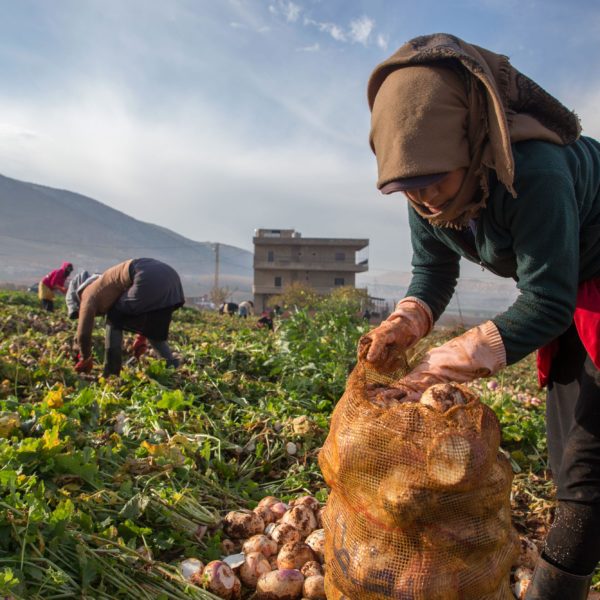
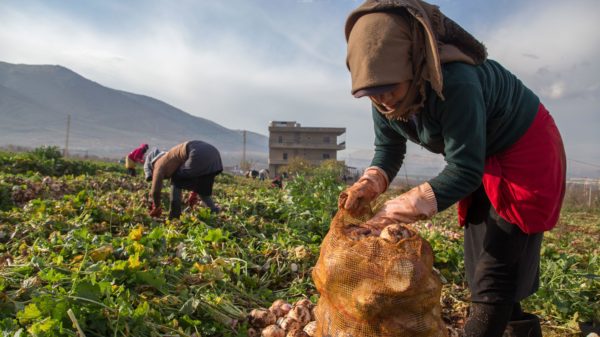
As our camp school reopened following the Covid quarantine, our education project needed to institute new levels of sanitation and cleaning and we were able to give Um Waliid the opportunity to serve at the center. She works afternoons and weekends harvesting potatoes to make ends meet. 

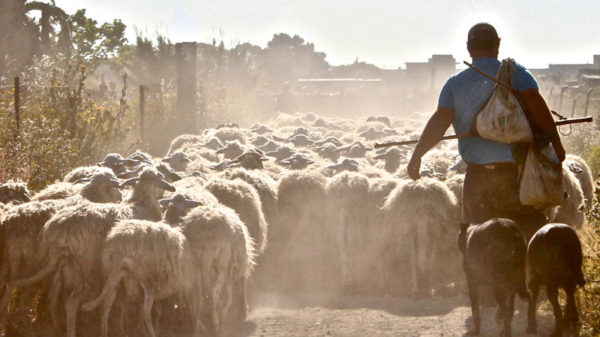
Recently while harvesting potatoes, she was accidentally shot in the leg by a neighboring shepherd! We were able to help with her initial hospital bills through our emergency relief fund that is funded by generous partners like you. Additionally, our health team is reaching out to her, offering help with her wound care, medical follow up, and trauma care from the incident to make sure our friend and colleague is restored and able to continue to provide for her family.
Relief

“My family is happy again.”

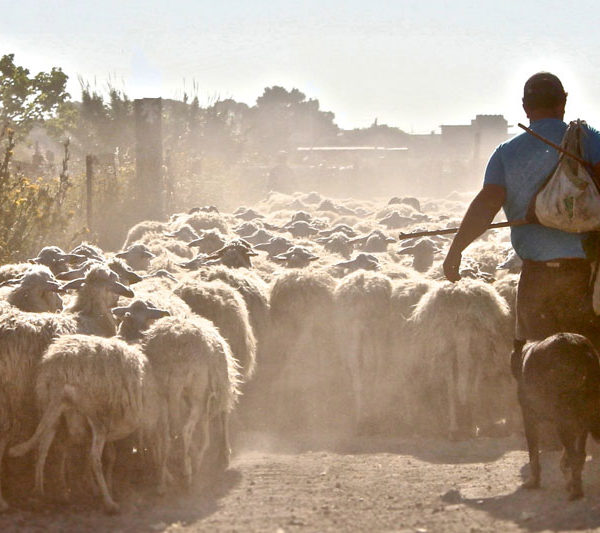
Living among the beautiful mountains of the Middle East, Abu Hamed is a middle-aged man caught in a difficult situation. He has had to flee his country due to war…
Living among the beautiful mountains of the Middle East, Abu Hamed is a middle-aged man caught in a difficult situation. He has had to flee his country due to war and his family can only eat if he finds work in a neighboring country. Some weeks, he will get one day of work out of ten, which causes his family to be without food and drink for a long time! One day, some of our Network visited his camp wanting to help those in need. One of those visiting was…

Living among the beautiful mountains of the Middle East, Abu Hamed is a middle-aged man caught in a difficult situation. He has had to flee his country due to war and his family can only eat if he finds work in a neighboring country. Some weeks, he will get one day of work out of ten, which causes his family to be without food and drink for a long time!

One day, some of our Network visited his camp wanting to help those in need. One of those visiting was one of our local partners, Abu Jaafer, who met Abu Hamed and shared with him that he is loved and that Cedars Network wants to help people like his family. When Abu Hamed heard from Abu Jaafer that his family could receive a food voucher that could be redeemed for food at a local supermarket, providing his family with enough food to feed them for a few weeks, he was elated! He could provide for his family! His life was changed.

He would later share with Abu Jaafer, “This food voucher gave me new life. The kids were falling asleep hungry. My wife was falling asleep weeping. Now they are happy again.”
Relief

“I’m not rich, but my family has food.”

When Abu Jaafer, one of our local collaborators, was visiting a local group of refugee families to learn more about the challenges they are facing, he encountered Abu Hussein. Through…
When Abu Jaafer, one of our local collaborators, was visiting a local group of refugee families to learn more about the challenges they are facing, he encountered Abu Hussein. Through brief conversation, he learned that Abu Hussein has kids attending Hope Learning Center (one of our learning centers). He shared about how cold the winter gets where they live and how it’s hard to earn money for his family. Abu Jaafer shared with him that Cedars Network can provide help for him in the form of a food voucher and…

When Abu Jaafer, one of our local collaborators, was visiting a local group of refugee families to learn more about the challenges they are facing, he encountered Abu Hussein. Through brief conversation, he learned that Abu Hussein has kids attending Hope Learning Center (one of our learning centers). He shared about how cold the winter gets where they live and how it’s hard to earn money for his family. Abu Jaafer shared with him that Cedars Network can provide help for him in the form of a food voucher and Abu Hussein started to laugh with joy!

A few months after using the voucher to purchase food for his family, Abu Hussein invited Abu Jaafer into his home. He greeted him by saying, “I’m not very rich, but my family has food. Life is hard here, but our lives have been changed because of the food vouchers.”
Education

Create Opportunities for Syrian Kids

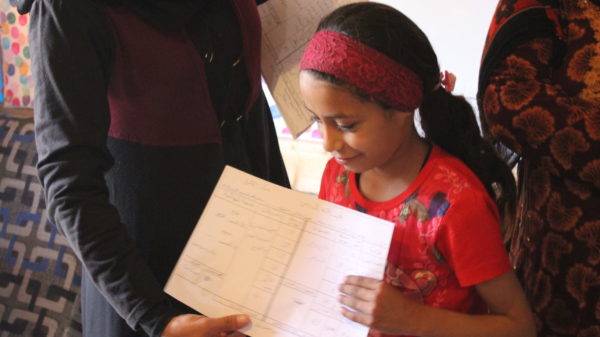
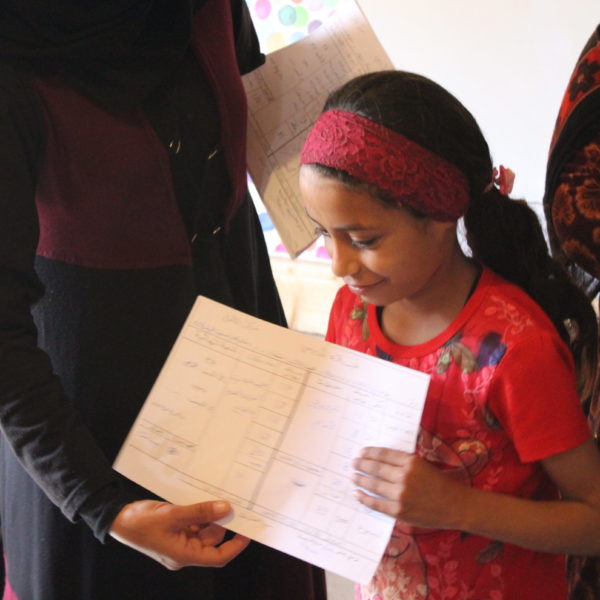
Are you ready to open up future opportunities for Syrian refugee kids? We’re really excited to be opening up a class dedicated to preparing our students for the important ninth-grade…
Are you ready to open up future opportunities for Syrian refugee kids? We’re really excited to be opening up a class dedicated to preparing our students for the important ninth-grade exam. Passing the ninth-grade exam is similar to earning a high school diploma for Syrians. Some students get a job after completing their ninth-grade exam and others go on to study their specific areas of interest. It is a very rigorous exam that requires dedication and study and passing it will open up many more opportunities for their future! COVID…

Are you ready to open up future opportunities for Syrian refugee kids? We’re really excited to be opening up a class dedicated to preparing our students for the important ninth-grade exam. Passing the ninth-grade exam is similar to earning a high school diploma for Syrians. Some students get a job after completing their ninth-grade exam and others go on to study their specific areas of interest. It is a very rigorous exam that requires dedication and study and passing it will open up many more opportunities for their future!

COVID is continuing to disrupt this school year. In spite of this obstacle, we press on in seeking to make this ninth grade exam achievable for our students. We are currently heavily relying on remote learning for this preparatory class, including English lessons, now more important than ever. The English portion of the 9th grade test has recently become more challenging with an emphasis on critical thinking skills instead of just rote memorization.

Other subjects on the exam include Arabic, Math, Science, and Social Studies. One of our teachers, “Ben”, came to us this past summer asking if we could open up this class and expressed his passionate desire to see his students continue in their studies, get their 9th grade degree, and pursue a future career in Syria. He will be teaching this class. The cost for this class for one year is around $3,500, which includes school books, supplies, and teacher’s salary.

War has tried to push down and silence this generation of Syrian children. Join us in collaborating with Syrian educators to provide kids with future opportunities today!
Education

Student Highlight: Areej

When Areej’s homeroom teacher asked me how Areej is in class she was surprised I hadn’t labeled her as one of my troublesome students. I thought, “maybe a little aloof…
When Areej’s homeroom teacher asked me how Areej is in class she was surprised I hadn’t labeled her as one of my troublesome students. I thought, “maybe a little aloof and occasionally gets up from her seat at inappropriate times but overall she didn’t interrupt, walk on the tables, or bother other students”. One day after school I was waiting for the bus to take me home when Areej skipped by and invited me to her home. I promised that I’d visit the following week. Kayla and I followed Areej…

When Areej’s homeroom teacher asked me how Areej is in class she was surprised I hadn’t labeled her as one of my troublesome students. I thought, “maybe a little aloof and occasionally gets up from her seat at inappropriate times but overall she didn’t interrupt, walk on the tables, or bother other students”. One day after school I was waiting for the bus to take me home when Areej skipped by and invited me to her home. I promised that I’d visit the following week.

Kayla and I followed Areej home after school and got to meet her mom, aunts and uncles. During our time together Areej and I demonstrated some of the things she’s learned in English class. I played it safe with words and phrases we use every day like, “stand up, sit down, and shake it out,” which is a little regulation exercise we do before starting the lesson. We also sang a song together that her mom loved and had her sing multiple times so other members of the family could see it and so they could take video.

At that point was when I noticed the Areej was able to sing the song, “cut, cut, cut with scissors…” with little input or support from me, not a true statement for the rest of my class yet. I then took a bit of a risk by pulling out some color cards and having her identity them. I only introduced the colors 2 days before so I was surprised that she was able to produce the new words on her own. It hit me that perhaps she was bored in class and that’s why she seemed aloof or wandered around!

Now knowing that she’s possibly picking up the information quicker than I realize I spend a few moments independently testing her during our individual activity time. This allows me to gauge where she’s at and challenge her with some more advanced material. Areej’s mom told me that everyday Areej studies with a private tutor for a couple hours before coming to school. What a little lover of learning! A great quality to help her achieve her dream of becoming a teacher.

Education

Blossoming

Ameena is one of my very favorite students. One of those who will stay in my heart forever, putting a smile on my face whenever I think of her. Ameena…
Ameena is one of my very favorite students. One of those who will stay in my heart forever, putting a smile on my face whenever I think of her. Ameena arrived at our school in October of last year, a few weeks into our academic year. Her family had recently moved to the valley from Beirut, where none of the children had been able to attend school. At age nine, Ameena had never been in a classroom before. She and her younger brother Ali could barely hold pencils when they…

Ameena is one of my very favorite students. One of those who will stay in my heart forever, putting a smile on my face whenever I think of her.

Ameena arrived at our school in October of last year, a few weeks into our academic year. Her family had recently moved to the valley from Beirut, where none of the children had been able to attend school. At age nine, Ameena had never been in a classroom before. She and her younger brother Ali could barely hold pencils when they arrived at our learning center and were placed in a 1st-grade classroom for students around their age. Their younger sisters, Huda and Hiba, were placed in kindergarten classrooms.

Ameena quickly blossomed.

It was immediately apparent both she and Ali were naturally very bright. And not only did they focus well and participate eagerly, but Ameena and Ali also had the best attendance out of everyone in their class. Despite living farther away than most students, they never missed a day. They were respectful and diligent in their learning, both in Arabic and in English.

I was so intrigued by her and her brother that I asked if I could visit them at home one day. I was picturing them in this immaculate little tent with a sweet, caring mother. How could she not be with such respectful children? I assumed Ameena was the eldest in her family because she's so responsible and such. They enthusiastically agreed, and the next day Ameena sweetly waited for me at the end of the day so we could walk hand in hand to their… building.

I was surprised to see they lived not in a tent but in an unfinished building a five-minute walk from the center. And honestly, it was worse than any tent I’ve seen. We walked up a grungy, unfinished concrete stairwell with no electricity. Their apartment, on the top floor, had multiple holes in the concrete walls and many empty window openings. I slipped off my shoes near the doorway and was led to the one room that was rainproof. Her mother greeted me, looking about 25, which was not surprising as many of the women I'd met from the rural areas were married around 14 or 15 years old. I sat on the floor cushion and read to the girls as the mother left to make us coffee. I met two more little siblings and trying to make conversation, and I asked Ameena if these are the six children in her family. She smiled and nodded. A few minutes later, however, I noticed that under the stack of blankets in the corner was actually a newborn baby! Oh! I think. So there's another one. When her mother returned, I asked, once again trying to make conversation,

“So you have four girls and three boys?” She too smiled and nodded. Minutes later, a preteen boy entered the room. No one introduced us, so I asked if he's a cousin. “No, he's my son,” she responded. What? Apparently there are eight children, and Ameena is not the eldest. I finished my coffee and demonstrated I needed to return home.

And sure enough, as I was preparing to go, Ameena’s mother showed me photos of two teenage boys in Beirut… who are also her sons.

I left mystified by the experience, realizing my assumptions were completely unfounded.

What wasn’t unfounded, however, was my impression of Ameena and Ali’s abilities.

By the end of the school year, Ameena and Ali could read and write basic words in both English and Arabic. Ali became one of my quickest readers, in fact, and Ameena was one of my strongest writers— particularly loving to write the English words, "I love you.”

Knowing that in such a transient community, it's never guaranteed that you’ll see students again after the summer break, I returned to school this fall anxious to see if Ameena and her siblings were still around.

My heart rested happily when I saw Ameena and received the biggest hug.

All four of the children are studying with us again this year and doing well. Although Ali unfortunately developed some surprising disruptive tendencies from the neighborhood boys he started hanging out with over the summer, we’re working together to ensure he remains at our school.

Not every student who registers with us has a success story. Many drop out over the course of the year, either from moving away, switching to another school, or beginning to work instead. Some just aren’t equipped to learn well and, even with decent attendance, don’t progress academically. Some prove so behaviorally challenging we have to let them go for the sake of the other students.

But thankfully, there are also those like Ameena and her siblings, and to be a small part of their blossoming despite the circumstances around them feels like a very sweet privilege indeed.

Education

Rediscovering Destiny

One evening we sat with Asma, one of our beloved teachers, in her home with her husband and children. All of her children have attended Hope Learning Center and she…
One evening we sat with Asma, one of our beloved teachers, in her home with her husband and children. All of her children have attended Hope Learning Center and she is one of our most valuable teachers. But we’ll tell you more about her later. Right now we want to tell you about her son. As we sat together on mats on the floor in their sitting room with the TV on in the background. Asma was beaming telling us about the progress her son, Muhammad Nur, had made. You…

One evening we sat with Asma, one of our beloved teachers, in her home with her husband and children. All of her children have attended Hope Learning Center and she is one of our most valuable teachers. But we’ll tell you more about her later. Right now we want to tell you about her son.

As we sat together on mats on the floor in their sitting room with the TV on in the background. Asma was beaming telling us about the progress her son, Muhammad Nur, had made.

You see, this family fled violence in Syria about four years ago. That particular day they decided it was safer to make the journey to Lebanon than to stay in Syria, even though her husband was on business in the capitol. She bravely set off with her five children. It took them three long days on foot over the mountain range that separates Syria and Lebanon carrying the two youngest of her children.

For Muhammad Nur, trauma manifested in obvious ways. He developed anti-social behavior and had a very difficult time making friends and playing well with other children. At recess he would often be seen standing in the corner of the playground by himself. He also had a very challenging start in the classroom. Learning did not come easy and neither did appropriate classroom behavior.

Asma recognized that this was not who Muhammad Nur was. While some may have labeled him as disruptive or disobedient, you believed with us that he was more than his trauma allowed us to see.

That evening, drinking tea in their sitting room, Asma proclaimed that she couldn’t believe the improvement she was seeing. Not only could he read and write in both Arabic and English, but with tears in her eyes she declared that her son has made friends!

Through the generosity of people like you, Hope Learning Center’s trauma-informed classrooms are giving children like Muhammad Nur an opportunity to be defined, not by their trauma, but by who they are destined to be.

Giving Tuesday is on December 3 and we would like to ask you to make a difference for a student like Muhammad Nur at Hope Learning Center. Your generosity can help a Syrian child overcome their trauma and live in their destiny.

Mark your calendar. Maybe forgo a few lattes this week and stash that money for the big day. No investment is too big or too small. You are making a difference.

Livelihood, News

Seven Ways to Support Refugees This Christmas

1. Fajr Beirut Our personal friends have collaborated with Lebanese artists to design these beautiful notebooks and we all have a few on our end tables at any given time.…
1. Fajr Beirut Our personal friends have collaborated with Lebanese artists to design these beautiful notebooks and we all have a few on our end tables at any given time. Fajr notebooks are handmade in Beirut by Syrian refugee women. They make great journals, or places to jot your ideas, to-dos and places you dream of traveling (of course). Available with thick white or recycled brown pages, the spines are hand punched and stitched with colourful threads and available in two sizes. Wherever you are in the world, they’ll post you…

1. Fajr Beirut

Our personal friends have collaborated with Lebanese artists to design these beautiful notebooks and we all have a few on our end tables at any given time. Fajr notebooks are handmade in Beirut by Syrian refugee women. They make great journals, or places to jot your ideas, to-dos and places you dream of traveling (of course). Available with thick white or recycled brown pages, the spines are hand punched and stitched with colourful threads and available in two sizes.

Wherever you are in the world, they’ll post you a notebook with Royal Mail and you can expect to receive it within 5-7 working days.

2. Knotty Tie Co.

Does Dad really need another tie? After you see these ties, the answer will be an obvious yes. You will love the fresh designs as much as you love the mission of the Knotty Tie Co. From employee benefits to college assistance to job skills, this company is creating the kind of community we all want to live in. Even if Dad doesn't need another tie (and we think he probably does), go check out their mission!

3. Preemptive Love

Preemptive Love has long been known as the group that shows up first in scary places with relief and stays until the work is done - including development of jobs that produce these beautiful products. I can say from personal experience that their candles are premium quality from the container to the lingering smell of figs in the air. They also have soap, knit products and other apparel.

4. Re:new Project

This company hails from the Chicagoland area and dreams of helping women thrive as they rebuild their lives in the United States. They teach English and skills, then provide jobs making a wide variety of beautiful things - accessories for the home, bags for your friends, blankets for your baby, and maybe a pair of earrings for yourself. 😉

5. Soup for Syria

This is truly the gift that keeps on giving. Every time you make this soup, you will be reminded of Syrian women making these same recipes from heart. And as your family eats these recipes together, you will be celebrating our shared humanity. This cookbook was put together by celebrity chefs (such as Anthony Bourdain) and all the proceeds go towards food relief in Syria.

6. Tight Knit Syria

Six years ago, Dana Kandalaft walked into a refugee settlement with a knitted purse on her shoulder and the Syrian girls got wildly excited and showed her their own knitting and handcrafting skills. Tight Knit Syria was born (and growing! now with a collective in Lebanon and Northern Syria). Go check out their handiwork and make sure you read the stories behind the artisans.

6. Vickery Trading Co.

Based in Colorado, Vickery Trading Co. invests in the long term health of resettled women through personal development and job skills. And if that wasn't enough, they produce the cutest children's clothing. You'll also find scrunchies, scarves, stockings and other handmade goods.

Health, Trauma Care

Building Emotional Resilience Through Art

We ducked into a large tent, carrying a plastic bag full of art supplies and were greeted by the smiling faces of a dozen squirmy children. After good mornings were…
We ducked into a large tent, carrying a plastic bag full of art supplies and were greeted by the smiling faces of a dozen squirmy children. After good mornings were exchanged, I asked, "Who enjoys art? Drama? Games?" Hands shot up, "We do! We do! We do!" Building emotional resilience through art was the goal of the day, and we had fun playing games, acting out stories, and making art together. All while the children bravely identified their feelings, learned how to think about big emotions, and connected with each…

We ducked into a large tent, carrying a plastic bag full of art supplies and were greeted by the smiling faces of a dozen squirmy children.

After good mornings were exchanged, I asked, "Who enjoys art? Drama? Games?"

Hands shot up, "We do! We do! We do!"

Building emotional resilience through art was the goal of the day, and we had fun playing games, acting out stories, and making art together. All while the children bravely identified their feelings, learned how to think about big emotions, and connected with each other in a brave and vulnerable space.

Our last activity was winding down. Each child had just identified a safe place in their mind. A place, real or imaginary, where they could go to calm down when emotions seemed out of control. Now they were making a little clay object that reminded them of this place.

Among the religious symbols, nature scenes, and heart shapes, one boy had fashioned a large snake from his lump of white clay. When asked about his choice, he looked down, shrugged, and said quietly, "There is no safe place."

The bravery and emotional awareness of that little sentence is the beginning of the ability to change.

Studies report that "Adverse Childhood Experiences (ACES) can disrupt the growing bodies and brains of children, leading to a higher risk of disease, disability, risky health behaviors, and social problems later in life. Having four or more ACEs was associated with a four- to 12-fold increased risk of alcoholism, drug abuse, depression, and suicide attempts. ACEs have been linked to the development of cardiovascular disease, diabetes, cancer, chronic lung disease, and hepatitis."

In simple terms, according to these studies, trauma will adversely affect a significant portion of the next generation of Syrians. Crippling fear in everyday situations, chronic pain that is rooted in emotional pain, outbursts of emotion that seem uncontrollable, inability to maintain healthy interpersonal relationships… these are all direct effects of trauma lodging itself in our bodies.

But studies also report that the resiliency of the human spirit can expand in incredible proportions, and we've seen men, women, and children take those first steps to growth. Fear, pain, anger, rejection, and isolation do not have to have the final word. We believe that every human is capable of and deserves the chance to not just survive, but thrive.

We're excited to use arts and sports and other proven modes of creative expression to help raise emotional awareness, expression, and regulation. We're looking forward to learning about and mobilizing sources of cultural tradition. But most of all, we're thankful for the chance to move towards emotional, physical, and spiritual wholeness together.

We are learning to be brave together. We are learning to step into places of pain together—trusting that our hearts and brains were made to heal as we lovingly tend to them within the community.

Health, Trauma Care

For Brave Mothers Like Aisha

I first met Aisha a year and a half ago, when she was pregnant with her fourth child. I remember that day so vividly, it was my first time visiting…
I first met Aisha a year and a half ago, when she was pregnant with her fourth child. I remember that day so vividly, it was my first time visiting a Syrian refugee camp in the Middle East, and as a midwife, my heart was drawn to the woman sitting in front of me. As I talked with her, so many questions filled my mind. Had she had prenatal care? What was preventing her from getting the medication she needed? Where could she go if she needed help? A year and…

I first met Aisha a year and a half ago, when she was pregnant with her fourth child. I remember that day so vividly, it was my first time visiting a Syrian refugee camp in the Middle East, and as a midwife, my heart was drawn to the woman sitting in front of me.

As I talked with her, so many questions filled my mind. Had she had prenatal care? What was preventing her from getting the medication she needed? Where could she go if she needed help?

A year and a half later, I'm back in Aisha's tent, asking myself the same questions. Aisha is pregnant again, after losing her last baby close to term. She is not feeling well, but welcomed us warmly as we come back to check-in on her. She is seven months pregnant, has not received prenatal care, and has moderately elevated blood pressure. We urge her to see a doctor ASAP, and continued to urge her for weeks until she finally is able to visit a nearby hospital.

The next opportunity I am able to see her is two months later, and this time I sit with her and her community, mourning the loss of yet another baby and her near encounter with losing her own life during the birth.

Unfortunately, Aisha's story is all too common. The same barriers to healthcare play out again and again: cost, not knowing where to go, lack of transportation, lack of support, being declined care or given sub-standard care, etc. Our team's first-hand experience confirm what statistics have told us: many Syrian refugee women do not receive adequate prenatal and postnatal care. Maternal and infant mortality rates among Syrian women in our region are nearly three times higher than that of local women, at 27 deaths per 100,000 births. Many of these deaths result from preventable causes.

As a new team of midwives and other healthcare professionals here to address these needs, we have asked ourselves, “What would it look like to empower Syrian communities rather than simply provide aid? How can we learn from Syrian communities who have built strong families for centuries? What skills can we impart to Syrians that will aid the rebuilding of their country?”

We are far from having all the answers, but our vision is two-fold: 1) Addressing the needs of the whole person by providing holistic healthcare and trauma care, and 2) Equipping and empowering Syrians with practical medical competencies that they can take back to Syria, not simply providing relief care.

As we launch our project and serve women like Aisha, we realize the importance of coming in with humility and seeking to learn from the community we wish to serve. We are excited to begin this journey and look forward to sharing with you what we learn along the way!

Trauma Care

Three Reasons We Believe in Holistic Care

Physical symptoms are often connected to deeper issues. The dictionary tells us that holistic medicine is “characterized by the treatment of the whole person, taking into account mental and social…
Physical symptoms are often connected to deeper issues. The dictionary tells us that holistic medicine is “characterized by the treatment of the whole person, taking into account mental and social factors, rather than just the symptoms of a disease.” The brain has an incredible capacity to protect us during traumatic events, but as the situations continue and emotional health is left uncared for, the brain continues to ask the body to stay on high alert. This sustained “flight or fight” state of mind can take a high toll on the…

  1. Physical symptoms are often connected to deeper issues.

The dictionary tells us that holistic medicine is “characterized by the treatment of the whole person, taking into account mental and social factors, rather than just the symptoms of a disease.”

The brain has an incredible capacity to protect us during traumatic events, but as the situations continue and emotional health is left uncared for, the brain continues to ask the body to stay on high alert. This sustained “flight or fight” state of mind can take a high toll on the body, resulting in chronic pain and fatigue.

With so many significant people and place relationships severed during displacement, many refugees experience ongoing emotional duress which shows up in their bodies. In these cases, if the whole person is not cared for, the physical symptoms can only be managed and not cured.

  1. Refugees are empowered to take responsibility for their own wellbeing.

To simply focus on the physical cure or relief of symptoms puts almost all of the responsibility and dependence on the medical provider. While there are medical problems and illnesses that require the attention of a medical professional, there are also many things that a patient can do to increase wellbeing.

We aim to be trauma-informed in all of our care, building awareness and agency in each patient. We believe that a listening ear, mindfulness, an afternoon of relay games, a women’s art group - as well as ultrasounds, prescriptions and diet improvements - all contribute to wholeness. And so many of these things can be done in the course of everyday life.

  1. Holistically healthy people are empowered to create healthy communities around them.

When a person thrives physically and emotionally, their capacity and imagination will naturally grow as well. As a person within the community gains a sense of control and critical thinking over their own wellbeing—no longer depending on outside support or power—they are free to share this knowledge and empowerment to those around them in ways that are unique as the person themselves.

As we watch holistic healing taking place in those around us, we believe with all our hearts that the future of Syria can be bright, one community at a time.

Menu